How to Style a Coffee Table Like a Designer
I used to overthink coffee tables. Every time I walked into a friend’s living room and saw their perfectly styled tray with curated books and a tiny plant, I wondered what secret knowledge they had that I didn’t. My coffee table was either completely bare or a dumping ground for remotes, half empty mugs, and last week’s mail.
Then I learned the rule that changed everything. It’s so simple I almost laughed when a designer friend explained it to me. Three layers. That’s it.
Today I’m sharing my exact coffee table styling formula, the one I use in my own home and every time I help a friend refresh their living room. No expensive coffee table books. No obscure decorative objects. Just three layers anyone can create.
Why Most Coffee Tables Look Messy
Here’s what I figured out after years of getting it wrong. The problem isn’t that you don’t have nice things. The problem is you don’t have a system for arranging them. Without a system, even expensive accessories look cluttered. With a system, even thrifted finds look intentional.
The three mistakes I see most often: putting everything at the same height, scattering small items without a tray to anchor them, and forgetting that negative space is your friend.
My 3 Layer Coffee Table Formula
Layer 1: The Anchor
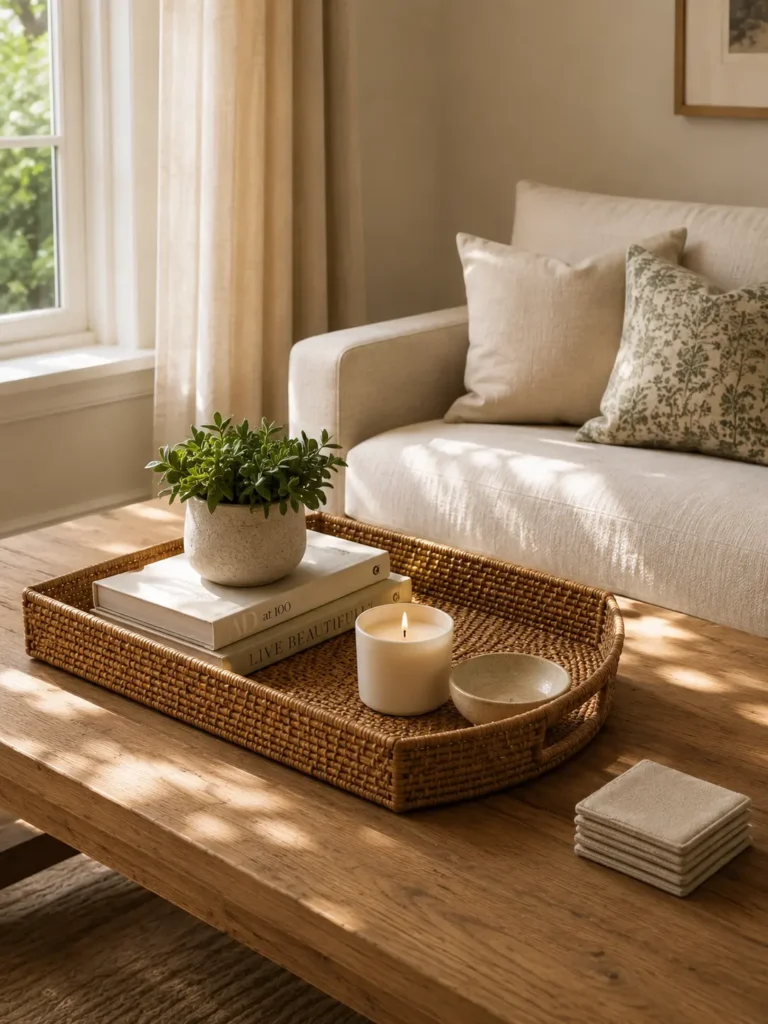
Every coffee table needs one large object that grounds the whole arrangement. This is usually a tray. I use a rectangular wooden tray I found at a thrift store for three dollars. A tray is magic. It turns random objects into a deliberate collection.
When choosing a tray, size matters. It should be roughly one third to one half the width of your coffee table. Anything smaller looks insignificant. Anything larger overwhelms the table. For a standard four foot coffee table, a tray between sixteen and twenty four inches wide is ideal.
Wood trays add warmth. Metal or mirrored trays add glamour and reflect light beautifully. Woven or rattan trays add texture and a casual organic feel. Choose based on the overall mood of your room. My living room is warm and neutral, so I use a wooden tray with a slightly rustic finish.
Layer 2: The Vertical Element
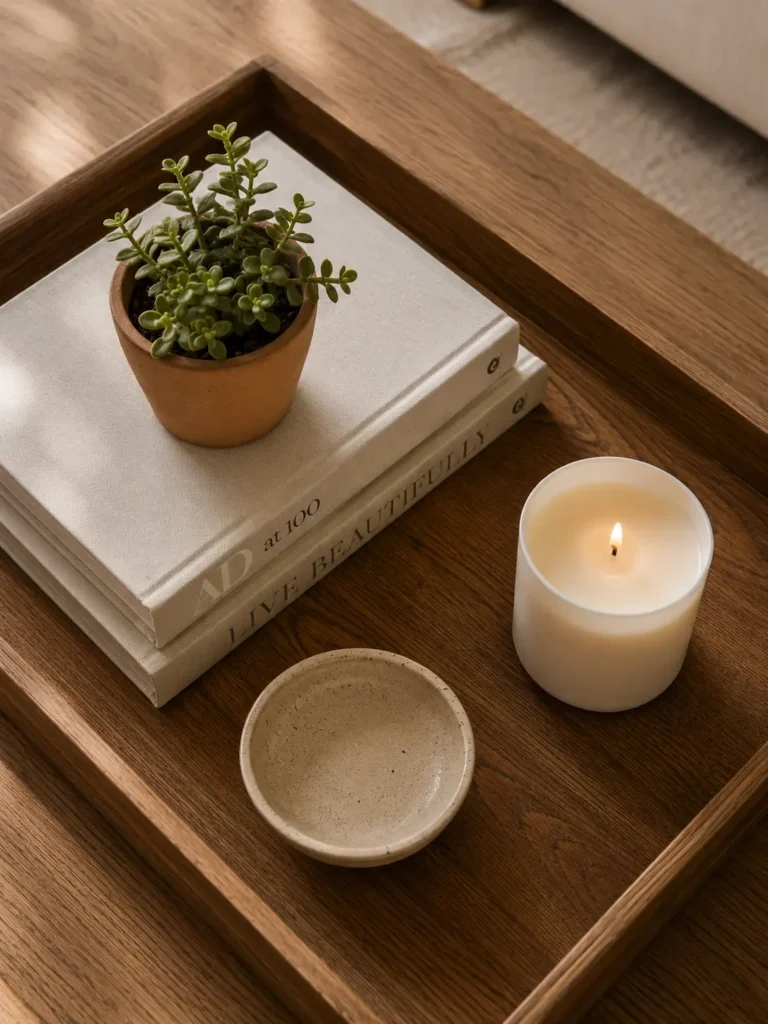
Something that adds height. A stack of two or three books works perfectly. I use a vintage art book I got for a dollar and a small plant on top. The height draws the eye upward and makes the whole arrangement feel dynamic.
Books are decor, not just reading material. I collect used books with beautiful covers and spines in colours that match my palette. Remove the dust jackets to reveal the actual book cover underneath. Old hardcovers in muted tones are especially beautiful and cost next to nothing at thrift stores.
Place your stack of books inside the tray, not next to it. Then pop a small object on top. A tiny succulent. A small ceramic bowl. A decorative object that means something to you. This creates instant height variation.
Layer 3: The Personal Touch
One small object that sparks conversation. A candle that smells like your favorite season. A small ceramic bowl from a trip. A tiny framed photo. Just one thing that says something about you.
In my tray, alongside the books and plant, I keep a cream ceramic candle. It’s the same scent I use throughout my home, a subtle sandalwood and vanilla. When guests sit on my sofa, the candle is right there, quietly doing its job of making the room feel warm and inviting.
The Rule of Odd Numbers
Designers love odd numbers for a reason. Group items in threes or fives. My coffee table has three distinct groupings: the tray with books and a plant, a small stack of coasters, and a ceramic candle. Three feels complete without feeling crowded.
Negative Space Is Not Empty Space
The most important part of styling isn’t what you add. It’s what you leave empty. Half the table should be bare. That empty space lets the styled areas breathe. It also means there’s actually room to put down a cup of tea.
I constantly have to stop myself from adding just one more thing. Restraint is the hardest styling skill to learn and also the most impactful.
The Tray Is Your Secret Weapon
I’ve mentioned trays multiple times because I genuinely believe they are the single most transformative styling tool. A tray does one powerful thing. It takes scattered objects and turns them into a deliberate grouping. The border of the tray says these things belong together. Without the tray, they’re just things sitting on a table.
If you don’t have a tray, you can use a large wooden cutting board, a serving platter, or even a large hardcover book laid flat as a base. I’ve used all of these at various points and they all work beautifully.
Styling for Different Table Shapes
Rectangular Tables
These are the most common and the easiest to style. Place your tray slightly off centre. Centred trays can feel staged and overly formal. Off centre with empty space around it feels more natural and lived in. On the opposite end, place one small object for balance. A single candle, a small stack of coasters, or a tiny plant.
Round Tables
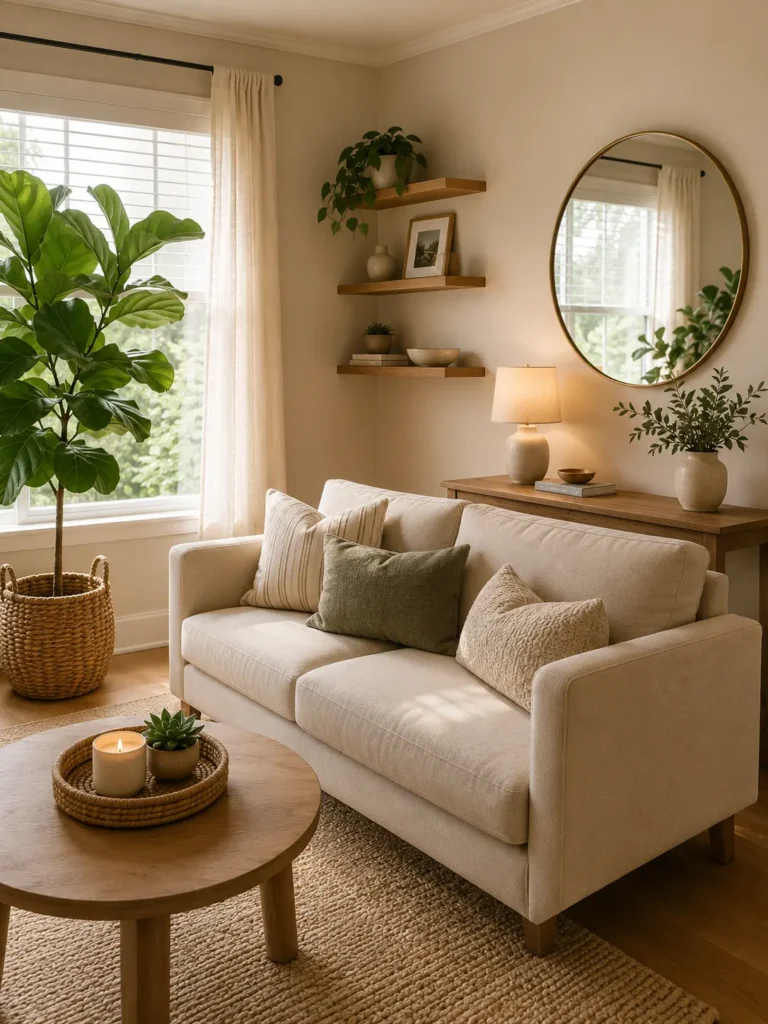
Round tables benefit from a centred arrangement. A round tray in the centre with objects arranged inside it works beautifully. Follow the same three layer formula, just adapted for a circular layout. A round tray with a candle in the centre, a small plant, and a decorative object arranged around it in a triangle shape.
Square Tables
Square tables can handle a slightly larger tray. A square or rectangular tray positioned in the centre works well. You can also use two smaller trays placed diagonally opposite each other for a more dynamic look.
Styling for Small Coffee Tables
My coffee table is barely two feet wide. For years I thought styling it was pointless. What could I possibly fit on something so tiny without it looking cluttered?
The secret to styling a small coffee table isn’t using fewer things. It’s using smaller things arranged more intentionally. On a small table, you don’t need three groupings. Two items is enough. A small round tray holding a candle and one tiny plant next to it. That’s it. The tray contains the items so they feel intentional rather than scattered.
Go vertical instead of horizontal. A tall slim vase with a single stem takes up very little surface area but adds significant height and visual interest. Pair it with one short object like a small ceramic dish and you have contrast without clutter.
Seasonal Swaps That Keep It Fresh
One of the best things about coffee table styling is how easy it is to refresh. Every few months I swap one or two objects to reflect the season.
In spring I add a tiny vase with a single tulip or a small branch with fresh green leaves. In summer I switch to lighter coloured ceramics and maybe a coastal element like a small piece of driftwood or a shell. In autumn I bring in warm tones, a small pumpkin, a cinnamon scented candle, a chunky knit coaster. In winter I add a tiny evergreen sprig, a warm glowing candle, and heavier textures.
These small swaps take five minutes and keep the room feeling current without buying anything new.
The Quick Win
If you do nothing else, buy a tray. Put everything currently scattered on your coffee table into that tray. Instantly, the chaos becomes a collection. That one move alone will make your living room feel forty percent more put together.
What to Read Next
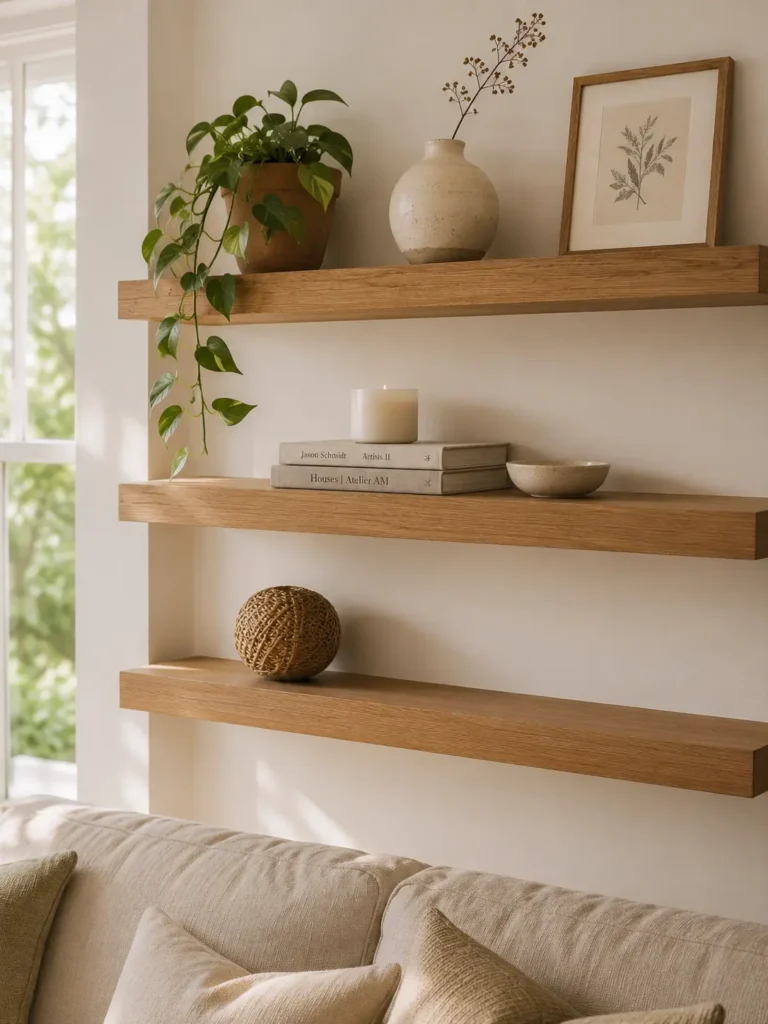
If you loved these styling tips, you’ll want to see my complete guide to making your whole home look expensive on a budget. It covers lighting, textiles, surface styling, and the foundational principles that guide every decorating decision I make. And if you’re working on your shelves next, my floating shelf decor guide shows you how to style shelves that look curated rather than cluttered.
Until next time,
Anna, Home Decor Gems 🤍
2 Comments